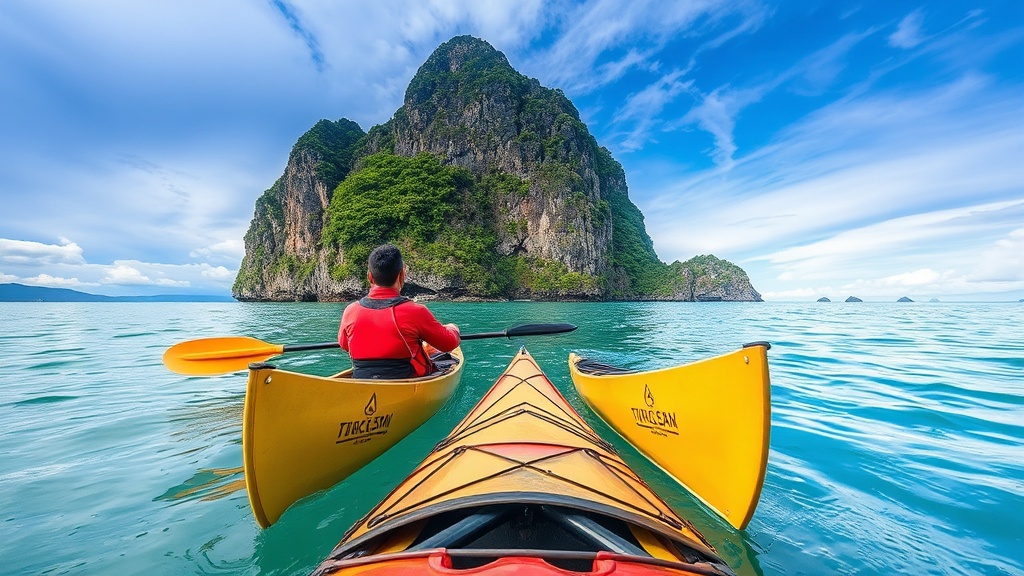
6 Remote Island Archipelagos for Serious Sea Kayakers

The Marquesas Islands, French Polynesia
Socotra Archipelago, Yemen
The Azores, Portugal
Lord Howe Island, Australia
The Galapagos Islands, Ecuador
Saba and the Caribbean Lesser Antilles
Most people assume that the best sea kayaking happens near established resorts or well-mapped coastal paths. That's a mistake. If you're a serious paddler, the real magic—and the real challenge—lies in the remote archipelagos where the crowds don't go and the logistics are actually difficult. This list focuses on six remote island chains that require high-level skill, significant preparation, and a willingness to deal with unpredictable ocean conditions.
Where Can You Find the Most Challenging Sea Kayaking?
The most challenging sea kayaking is found in remote, high-latitude, or deep-ocean archipelagos where weather patterns are volatile and rescue services are non-existent. These aren't your standard weekend paddle spots. We are talking about places like the Aleutian Islands or the remote reaches of the South Pacific.
1. The Aleutian Islands, Alaska
The Aleutians offer a brutal, beautiful experience for those who can handle heavy swells and rapid temperature shifts. You aren't just fighting the current here; you're fighting the wind. The volcanic peaks rising straight out of the Bering Sea create microclimates that can turn a calm morning into a white-knuckle afternoon in minutes.
Expect to see massive sea otters and perhaps even a passing whale, but don't get distracted. You'll need a high-end drysuit—I personally recommend the Kokatat Odyssey for these waters—and a sturdy sea kayak with a robust skeg. The water is frigid. Even on a sunny day, the thermal shock of a capsize is no joke.
2. The Marquesas Islands, French Polynesia
While many flock to Tahiti, the Marquesas remain rugged and relatively untouched. The geography here is vertical and dramatic. You’ll find deep bays that offer shelter, but the open water between islands can be intimidating. The currents are strong, and the swells can be massive.
It’s a long way from anywhere. If you're planning a trip here, you need to be self-sufficient. There are no easy waypoints. You’ll be relying on your own GPS, paper charts, and a very reliable compass. It's the kind of place where a mistake in your navigation becomes a serious problem very quickly.
3. The Socotra Archipelago, Yemen
Socotran waters are a different beast entirely. The archipelago is famous for its "Dragon's Blood" trees on land, but the marine environment is just as unique. The biodiversity is staggering, but the political situation in the region means you have to be extremely careful about timing and local permissions.
The water is warm, which is a relief compared to Alaska, but the unpredictable winds and the isolation make this a high-stakes environment. You aren't just paddling; you're exploring a prehistoric-feeling world. It’s a destination for the truly experienced.
How Much Gear Do You Need for Remote Archipelagos?
You need specialized, heavy-duty gear that prioritizes durability and protection against the elements over lightweight convenience. When you're days away from a paved road, your gear is your lifeline.
Don't skimp on your safety kit. A standard bilge pump isn't enough; you need a reliable paddle float, a high-quality spray skirt, and a way to communicate with the outside world. Since cell service is a fantasy in these spots, a Garmin inReach device is a non-negotiable piece of equipment.
| Gear Category | Essential Item | Why It Matters |
|---|---|---|
| Navigation | Physical Charts & Compass | GPS can fail or lose signal in deep valleys. |
| Safety | PLB or Satellite Messenger | Rescue is hours, if not days, away. |
| Apparel | High-grade Drysuit | Prevents hypothermia in cold currents. |
| Storage | Waterproof Dry Bags | Keeps your electronics and food dry in heavy spray. |
4. The Galápagos Islands, Ecuador
The Galápagos is a masterclass in marine biology, but for a kayaker, it's a lesson in respect. The currents around the islands can be incredibly powerful. You can find yourself drifting much further from your intended course than you anticipated. The wildlife is close—very close—and you must maintain a respectful distance to avoid disturbing the ecosystem.
Check the official Galápagos government site for any specific regulations regarding movement in certain protected zones. Many areas are strictly off-limits to human interference to protect the endemic species. If you push too far into a restricted area, you're looking at more than just a fine.
5. The Azores Archipelago, Portugal
Located in the middle of the Atlantic, the Azores offer a mix of volcanic scenery and deep-sea swells. The islands are lush, but the ocean around them is restless. It's a perfect spot for those who want to test their endurance against the Atlantic's unpredictable rhythm.
The Azores are a gateway to much of the Atlantic's power. You can find incredible swells here, but they require a high level of technical skill to manage. It's not just about strength; it's about understanding how to read the water. If you don't know how to read a swell, the Azores will teach you the hard way.
6. The Lofoten Islands, Norway
Lofoten is breathtaking, but the Arctic Circle doesn't play nice. The fjords provide some shelter, but the open stretches between the islands are subject to intense North Atlantic weather. The light is incredible—especially during the midnight sun—but the visibility can drop to zero in a heartbeat during a storm.
A sturdy, sea-capable kayak is a must. You'll want something that can handle the chop. If you're looking for more information on the environmental protections in the region, the Norwegian government website provides plenty of data on the delicate Arctic ecosystems. It's vital to stay within the legal bounds of these protected waters.
When planning these trips, I always suggest looking at sea kayaking fundamentals if you haven't mastered the basics of rolling and bracing. These archipelagos are not places for beginners. They are places for people who want to feel small against the scale of the ocean.
The logistics of these trips are often more difficult than the paddling itself. You have to consider how to transport your kayak, where you'll camp, and how you'll carry enough food for a week or more of exertion. It's a massive undertaking. But for the right person, it's the ultimate reward.
If you're interested in how to prepare for these more intense environments, you might find my thoughts on solo adventure planning useful for building your confidence in remote areas. Whether it's on land or sea, the preparation is what keeps the adventure from turning into a disaster.