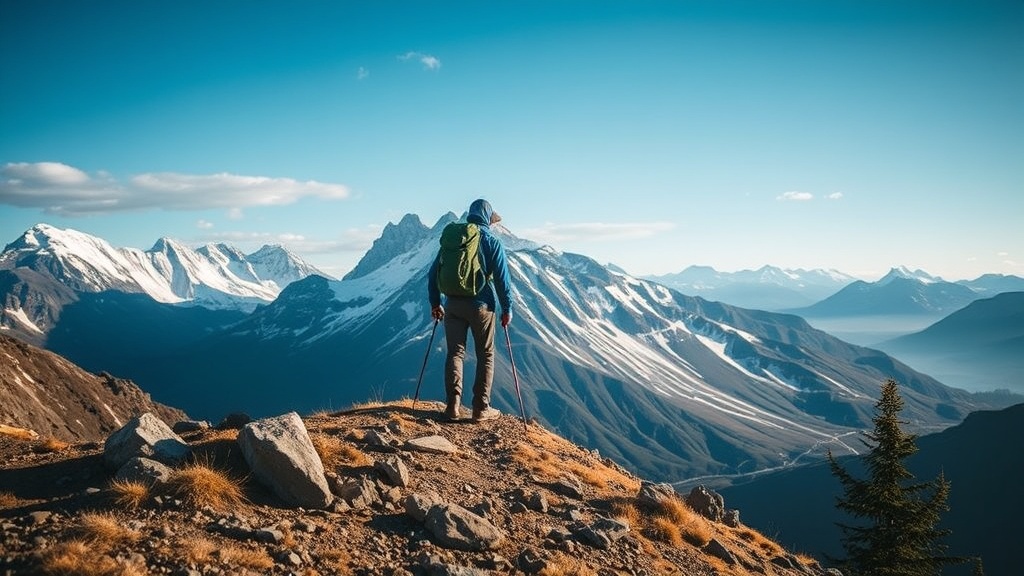
Navigating Unforeseen Route Changes on Your Next Backcountry Expedition

Navigating Unforeseen Route Changes on Your Next Backcountry Expedition
Imagine this: you've spent months meticulously planning a multi-day backcountry trek through a remote canyon system. Every mile is mapped, every food ration calculated, and your gear is dialed in. You’re deep into the wilderness, miles from the nearest trailhead, when you round a bend and — surprise! — a recent rockslide has obliterated the very trail you were supposed to follow. Or perhaps an unseasonal storm has swelled a river crossing, making it impassable. That sinking feeling? It's a common companion on offbeat trails. This guide isn't about avoiding these trail surprises entirely; that's often part of the adventure. Instead, it’s about equipping you with the mindset and practical strategies to confidently navigate last-minute detours, ensuring your expedition remains an enriching experience, not a cautionary tale.
What should you do when your planned trail becomes impassable?
The immediate reaction might be a surge of adrenaline, perhaps even a touch of panic. Resist the urge to push forward blindly or, conversely, to declare the entire trip ruined. Your first, most important action is to stop, assess, and breathe. Pull back from the immediate obstacle to a safe, stable spot where you can think clearly.
- Stop and Assess the Obstacle: Don't just look at the blockage; try to understand it. Is it a temporary flood that will recede? A fresh rockslide that might still be unstable? A washed-out section that looks like it could be safely bypassed with a little scrambling, or one that drops into a sheer ravine? Consider the scale of the problem. Is it truly impassable, or just incredibly difficult and risky? Your safety is always the highest priority. If a route feels inherently dangerous, it probably is.
- Consult All Your Resources: This is where your pre-trip preparation really pays off. Break out your physical maps — topographic ones are best for revealing potential alternative terrain — alongside your GPS device or smartphone with downloaded offline maps. Cross-reference what you see on the ground with what your maps tell you about the surrounding area. Are there contour lines indicating a gentle slope nearby that could offer a bypass? Or are you boxed in by cliffs? If you have a satellite communication device (like an InReach or SPOT), check for any available trail updates or weather alerts. This isn't just about finding another path; it's about understanding the 'why' behind the blockage, if possible.
- Prioritize Safety, Always: It bears repeating: turn back if conditions are too risky. The wilderness doesn't care about your schedule or your pride. There's immense wisdom and no shame in choosing a revised plan, even if that means returning to your starting point. Sometimes the most adventurous decision is the one that keeps you safe to adventure another day. Ask yourself: Can I safely navigate this detour? Do I have enough daylight, supplies, and energy? What are the potential hazards of a new route?
- Consider Alternatives, Both Big and Small: Once you've assessed the immediate situation and your safety, start brainstorming. Look for viable bypasses that keep you on a similar trajectory. This might involve a short scramble, a brief bushwhack around a fallen tree, or finding a ford further downstream where a river isn't as swift. In more extreme cases, you might need to consider an entirely new route — perhaps backtracking several miles to connect with a different trail system, or even identifying a safe extraction point if the original plan is truly unrecoverable. This is where a good understanding of your entire mapped area, not just your planned route, becomes invaluable.
How can you adapt your gear for an unexpected route?
Unexpected detours often mean unexpected conditions: thicker brush, steeper inclines, perhaps even colder temperatures or more exposed terrain than your original path. Your gear, ideally, should already be versatile, but adapting it on the fly is a skill unto itself.
- Embrace Multi-Use Items: Every item in your pack should ideally serve more than one purpose. That trekking pole? It’s not just for balance; it's also a probe for unstable ground, a tent pole for an emergency shelter, or even a splint. Your bandana can be a sun shield, a bandage, or a water filter pre-filter. When you're forced onto a less-traveled path, these versatile items become your best friends, enabling you to manage diverse challenges without carrying a heavier load.
- Review Emergency Supplies: A detour, especially an unplanned one, increases your exposure to risk. Take a moment to mentally (or physically) check your emergency kit. Is your first-aid kit fully stocked and accessible? Do you have enough extra water and food for potentially longer mileage or an overnight bivouac? What about an emergency shelter — a lightweight tarp or bivvy sack — that can protect you if you get stuck out longer than expected? Unexpected changes sometimes force an unplanned night outdoors, and being prepared for that possibility can make all the difference. For guidance on assembling a solid wilderness first-aid kit, check out resources like the