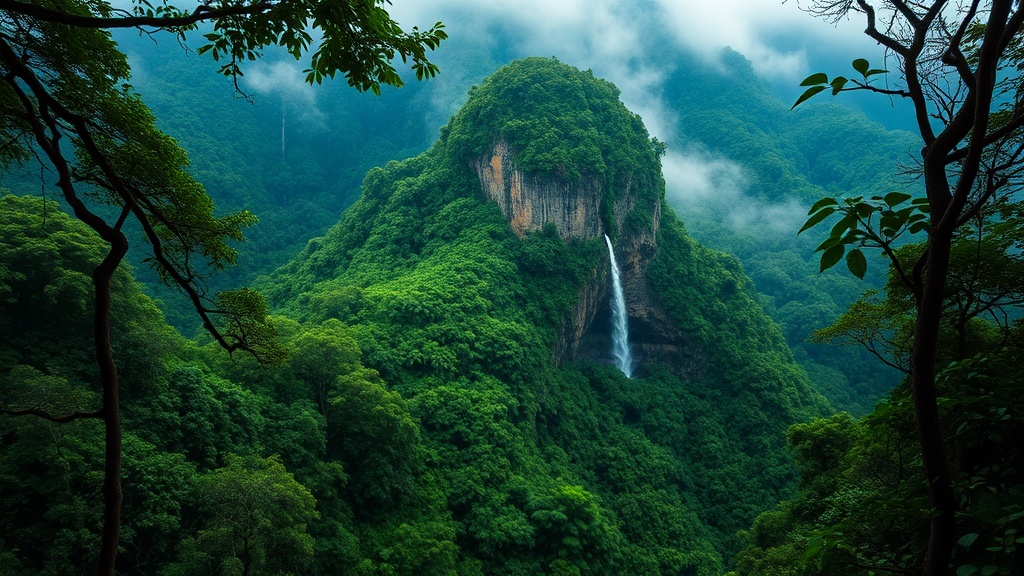
Chasing the Green Cathedral: Trekking the Lost World of Costa Rica's Monteverde Cloud Forest

The Mist, The Mud, and The Canopy
Imagine stepping out of a vehicle and immediately feeling the weight of a thousand tiny water droplets hitting your skin. It isn't rain—it's the constant, heavy mist of the Monteverde Cloud Forest. One moment you're walking through a clear path, and the next, a thick white curtain swallows the trees, turning the world into a ghostly, emerald dreamscape. This isn't just a walk in the woods; it's a trek through a high-altitude ecosystem that relies on constant moisture to survive. Understanding how to move through this terrain requires more than just a pair of boots; it requires a strategy for moisture, temperature shifts, and unpredictable visibility.
Monteverde sits in the Cordillera de Tilarán mountains. Unlike the low-altitude jungles of the Caribbean coast, this area stays cool and damp. You'll find yourself navigating roots that look like snakes, slippery stones, and paths that can turn into small streams after a heavy downpour. If you aren't prepared for the humidity, your gear—and your mood—will suffer. This guide covers the technicalities of a Monteverde trek so you can focus on the incredible biodiversity instead of your wet socks.
What Gear Should I Bring for Cloud Forest Trekking?
The biggest mistake people make when heading to the Monteverde highlands is packing for a standard tropical beach vacation. You need to think about layers and moisture management. The temperature can drop significantly as you ascend, and the humidity stays high regardless of the sun. I've seen too many travelers end up shivering because they underestimated the cloud forest's bite.
- Footwear: Forget lightweight trail runners unless they are highly water-resistant. You need something with a deep lug pattern. The mud here is thick and can be deceptive.
- Outer Shell: A high-quality waterproof jacket is non-negotiable. It's not just for rain; it's a windbreaker for when the mountain breeze hits the canopy.
- Dry Bags: Don't rely on a "waterproof" backpack cover. In a cloud forest, the moisture finds a way. Use dry bags inside your pack to keep your electronics and extra clothes bone-dry.
- Bug Protection: The insects here are persistent. Bring a high-strength repellent, but keep it away from your eyes and sensitive areas.
If you want to check the current weather patterns before you head out, I highly recommend checking the MeteoAndina reports for Central America to see if a heavy storm front is moving in. Being able to predict the microclimates in these mountains can change your entire experience.
How Difficult are the Monteverde Hiking Trails?
Difficulty in Monteverde is a spectrum. You might find a gentle, well-maintained path near the visitor center, or you might find yourself scrambling up a steep, root-filled incline that requires handholds. The difficulty isn't just about the incline; it's about the stability of the ground. The constant moisture makes the soil soft and the roots slick. If you aren't used to technical hiking, the uneven terrain can be taxing on your ankles.
| Trail Type | Difficulty Level | Best For |
|---|---|---|
| Boardwalk Paths | Easy | Bird watching and casual walks |
| Forest Loops | Moderate | Standard trekking and photography |
| High-Altitude Ascents | Hard | Serious hikers and endurance testing |
For those interested in the biological side, the World Wildlife Fund provides excellent context on why these specific elevations are so vital for the species living here. Understanding the fragility of the habitat helps you respect the physical limits of the trails.
Is it Better to Hike with a Guide or Solo?
This is a polarizing topic. If you are an experienced navigator with a high degree of comfort in low-visibility environments, you might prefer the solitude of a solo trek. However, the Monteverde Cloud Forest is a master of disguise. When the mist rolls in—and it will—your sense of direction can vanish in seconds. A local guide doesn't just show you the way; they show you the things you'd otherwise walk right past. They'll point out the Resplendent Quetzal or the tiny orchids clinging to a branch that look like nothing more than a knot in wood to the untrained eye.
Going solo allows for a certain rhythm, but going with a professional turns a physical activity into an educational experience. If your goal is purely to get from point A to point B, you can manage on your own. If your goal is to actually *see* the cloud forest, a guide is your best investment. They understand the local weather patterns and can often pivot the route if a certain section becomes too muddy or dangerous.
Keep in mind that the trails are heavily regulated to protect the delicate moss and lichen layers. Always stay on the designated paths. Stepping off-trail isn't just a way to get lost; it's a way to damage the very ecosystem you came to witness. The root systems and the forest floor are incredibly sensitive to human weight and movement.
The beauty of this region lies in its constant state of change. One hour, you're basking in a rare moment of sunlight; the next, you're navigating a dense, white void. Prepare for the moisture, respect the terrain, and you'll find that the Monteverde Cloud Forest is one of the most rewarding places on the planet for a serious trekker.