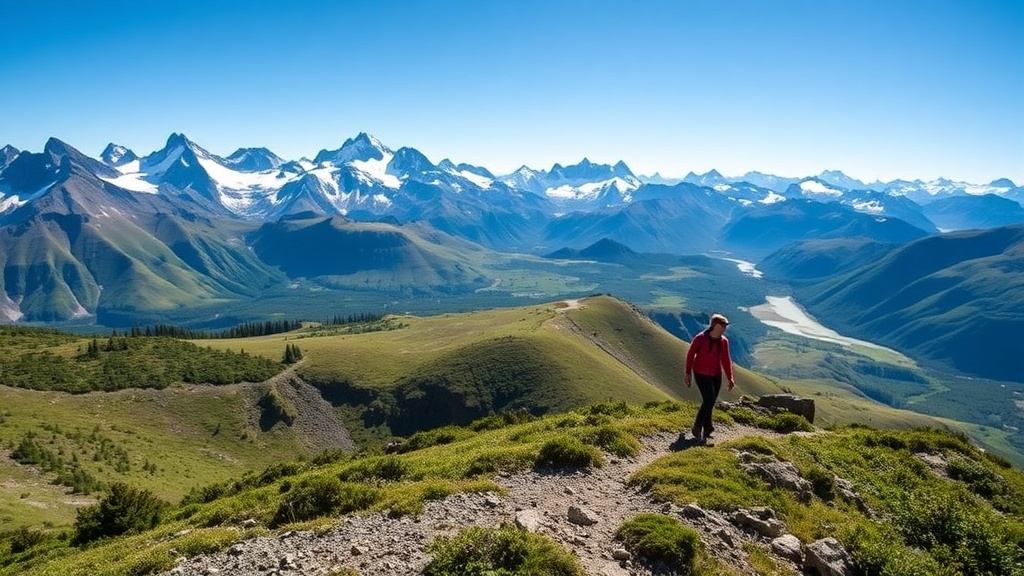
7 Hidden Hiking Trails in Patagonia Most Travelers Never Find

Patagonia has a reputation for extremes—jagged peaks, roaring winds, and bucket-list trails packed with hikers chasing iconic views. But beyond the famous circuits lies a quieter version of Patagonia, one that rewards curiosity, patience, and a willingness to step off the obvious path.
If you’re willing to trade crowds for solitude, these hidden hiking trails reveal a different side of southern Chile and Argentina: raw, silent, and deeply personal.
1. Laguna Azul Ridge Traverse (Chile)
While most visitors to Torres del Paine rush toward the Base Towers viewpoint, few venture to the eastern edge of the park. The Laguna Azul Ridge Traverse offers sweeping views of the Torres massif without the crowds—and with a sense that you’ve stumbled onto a secret.
The trail climbs gradually above Laguna Azul, weaving through windswept grasslands before reaching ridgelines that feel almost untouched. Guanacos roam freely here, and condors drift overhead.
- Distance: 12–15 km depending on route
- Why it’s special: Tower views without the traffic
- Best time: Early morning for calm winds
2. Cerro Castillo’s Backdoor Route (Chile)
Cerro Castillo is gaining popularity, but most hikers follow the standard route from Villa Cerro Castillo. The lesser-known “backdoor” approach—starting from Estancia Parada—takes you through remote valleys and past glacial lakes before connecting to the main circuit.
This approach adds distance but dramatically reduces encounters with other trekkers. Expect river crossings, wild campsites, and long stretches of silence.
- Distance: Multi-day (4–6 days)
- Why it’s special: Remote entry into a rising star destination
- Skill level: Intermediate to advanced
3. Paso del Viento Alternative Approach (Argentina)
In Los Glaciares National Park, Paso del Viento is known among experienced hikers—but even here, there’s a quieter variation. By approaching via the Río Eléctrico valley instead of the usual route, you bypass busier trailheads and gain a deeper sense of isolation.
The payoff is immense: views of the Southern Patagonian Ice Field stretching endlessly across the horizon.
- Distance: 3–4 days
- Highlight: Ice field panoramas few ever see
- Note: Requires navigation skills and preparation
4. Valle del Francés High Traverse (Chile)
Most hikers in Torres del Paine dip into Valle del Francés briefly before heading back to the W Circuit. But there’s a higher traverse—unmarked in parts—that climbs above the valley floor for a completely different perspective.
This route rewards confident hikers with elevated views of hanging glaciers and a sense of scale that’s hard to grasp from below.
- Distance: Variable (add 5–8 km)
- Why it’s special: A new angle on a famous valley
- Caution: Route-finding required
5. Lago del Desierto Hidden Trails (Argentina)
North of El Chaltén, Lago del Desierto feels like a different world. While some visitors take short hikes here, few explore the network of lesser-known trails that branch away from the main viewpoints.
These paths lead to quiet waterfalls, forest clearings, and ridge views overlooking the lake’s turquoise waters.
- Distance: 5–12 km options
- Why it’s special: Quiet forests and hidden viewpoints
- Access: Boat or long drive from El Chaltén
6. Dientes de Navarino Outer Loop (Chile)
The Dientes de Navarino Circuit is already considered remote—but even here, there are lesser-used variations. By extending into the outer loop sections, you’ll encounter fewer hikers and more challenging terrain.
This is one of the southernmost trekking routes in the world, and it feels like it. Weather changes quickly, and the landscape is stark and dramatic.
- Distance: 5–7 days
- Why it’s special: Extreme remoteness at the edge of the world
- Best for: Experienced trekkers seeking solitude
7. Parque Patagonia’s Jeinimeni Sector Trails (Chile)
Overshadowed by Torres del Paine, Parque Patagonia remains one of Chile’s best-kept secrets. The Jeinimeni sector offers a network of trails through lunar-like landscapes, caves, and colorful rock formations.
Few international tourists make it here, which means you’ll often have entire valleys to yourself.
- Distance: Multiple routes (day hikes to multi-day)
- Highlight: Mars-like terrain and cave systems
- Logistics: Requires planning due to remoteness
What Makes These Trails Different
These aren’t just quieter alternatives—they’re fundamentally different experiences. You won’t find neatly marked paths or crowded viewpoints. Instead, you’ll navigate shifting weather, ambiguous trails, and landscapes that feel genuinely wild.
That’s the trade-off. And for many, it’s exactly the point.
Tips for Hiking Patagonia’s Hidden Routes
- Be self-sufficient: Carry navigation tools, extra food, and emergency gear.
- Check conditions locally: Weather and trail access change quickly.
- Respect the environment: These areas remain pristine because they’re less visited.
- Start early: Wind tends to intensify later in the day.
Why Go Offbeat in Patagonia
The famous trails are famous for a reason—they’re stunning. But Patagonia’s real magic often lives just beyond them. On these lesser-known routes, the experience shifts. It becomes less about ticking off viewpoints and more about immersion: the sound of wind across empty valleys, the rhythm of your footsteps, the feeling that you’re somewhere few others have been.
That’s the Patagonia most travelers miss—and the one you’ll remember long after you leave.